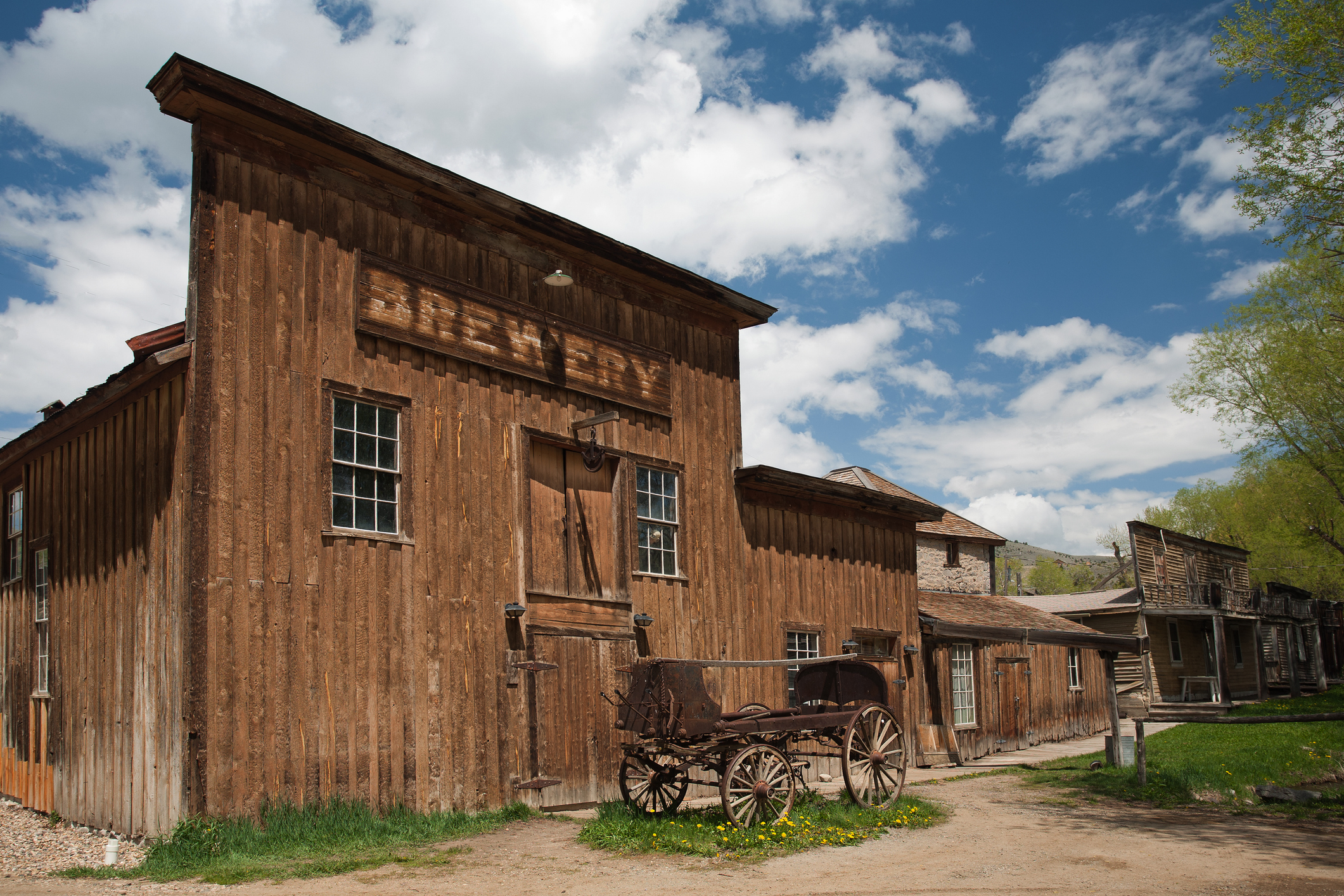
Ghost towns occupy a silent space between history and abandonment. Once formed by ambition, marketplace, or migration, they now stand mostly empty, their structures gradually reclaimed by time. Going to these places is not really only an exercising in nostalgia; it truly is an experience Using the impermanence of human effort and hard work. Ghost cities supply lessons about financial cycles, Neighborhood resilience, and also the fragile relationship involving men and women and location. Let us Check out them out with me, Gus Woltmann.
How Ghost Towns Are Established
Ghost towns are rarely the results of just one party. As a substitute, they emerge via a convergence of economic, environmental, and social forces that step by step—or from time to time abruptly—undermine the reasons persons settled there to begin with. Being familiar with how ghost towns are created reveals Substantially in regards to the fragility of human communities as well as their dependence on external units.
The most typical catalyst is financial collapse. Several ghost cities had been crafted close to only one business for instance mining, logging, manufacturing, or rail transportation. These industries often promised quick prosperity but relied on finite means or unstable markets. Every time a mine was depleted, a factory closed, or maybe a rail line was rerouted, Work vanished Just about right away. Without having choice employment, citizens ended up compelled to leave seeking option elsewhere.
Environmental aspects also Enjoy a significant part. Drought, flooding, soil depletion, or pure disasters can make an area unlivable or economically unviable. Agricultural towns, specifically, have disappeared when land could now not maintain crops or livestock. In some cases, human activity alone—overmining, deforestation, or pollution—accelerated environmental decline, turning after-practical settlements into dangers.
Technological improve is another effective driver. Innovations can render full cities obsolete by getting rid of the need for localized labor. Automation, new transportation routes, and shifts in Vitality generation have consistently reshaped settlement styles. Cities that are unsuccessful to adapt to those changes usually knowledge sluggish decrease as populations dwindle about many years rather then years.
Political and social forces may also contribute. Border adjustments, policy shifts, or authorities choices to relocate populations have emptied towns with small warning. In some regions, war or compelled displacement has remaining settlements deserted, their infrastructure intact but unused.
What unites these will cause is dependency. Ghost cities generally sort the place communities depend way too greatly on an individual source, market, or external authority. When that Basis collapses, the social cloth unravels promptly. Universities near, companies disappear, and remaining residents face expanding isolation.
Finally, ghost cities are developed when adaptation fails to keep rate with improve. They stand as Bodily reminders that thriving communities need range, resilience, and foresight—traits that establish regardless of whether a town evolves or is remaining driving.
Architecture as being a Historic File
The architecture of ghost towns functions being an unintentional but remarkably specific historical history. Very long right after created files fade or are dropped, buildings continue being to tell the Tale of how men and women lived, worked, and comprehended their globe. In deserted settlements, architecture preserves background in its most Actual physical kind—unfiltered, incomplete, and deeply revealing.
Each framework reflects the priorities of your Neighborhood that built it. Residential homes reveal social hierarchies through measurement, layout, and resources. Bigger properties frequently belonged to supervisors or business owners, even though smaller, less complicated dwellings housed laborers as well as their households. The existence of porches, shared courtyards, or clustered housing provides Perception into social conversation and Neighborhood norms. Even the orientation of structures speaks to local climate consciousness and each day routines.
Commercial and civic structures deliver more context. Universities, churches, saloons, and basic suppliers indicate what a Local community valued further than survival. A prominently placed church indicates the centrality of religion, though numerous saloons may possibly issue to transient populations or labor-hefty industries. Courthouses, put up places of work, and railway depots reflect a town’s integration into broader political and economic programs.
Products used in building also explain to a Tale. Non permanent boomtowns often relied on wood and speedily assembled buildings, signaling anticipations of shorter-term development. Far more long lasting products such as brick or stone recommend self-assurance in prolonged-expression prosperity. When these good properties now stand vacant, they emphasize the disconnect between expectation and outcome.
Decay itself gets to be Portion of the historical document. Weathering, collapse, and modification reveal how long a town continues to be abandoned and how nature reclaims human space. Damaged Home windows, rusted metallic, and overgrown foundations illustrate the gradual negotiation involving designed environments and pure forces.
Contrary to preserved historic web-sites, ghost cities absence curatorial intervention. There aren't any plaques to explain significance or restored facades to guide interpretation. Visitors must browse record by observation and inference, participating a lot more actively With all the past. This absence of narrative control will make the working experience additional personalized and, usually, much more impactful.
In this manner, architecture in ghost cities does over document record—it embodies it. These constructions stand as silent witnesses to ambition, adaptation, and decline, offering classes that are not taught, but encountered.
Classes About Impermanence
Ghost cities supply some of the clearest classes about impermanence the physical earth can provide. Unlike summary reminders of modify, these abandoned destinations make transience noticeable and unavoidable. Streets at the time fast paced with commerce, houses once stuffed with schedule, and establishments developed to last now stand silent. Their stillness forces people to confront how short-term even the most self-confident human endeavors may be.
One of the more hanging classes is how swiftly prosperity can vanish. Lots of ghost towns were being set up with optimism and certainty, supported by booming industries or strategic great importance. Investments have been built, infrastructure expanded, and futures imagined. But when instances shifted—regardless of whether through economic collapse, technological transform, or environmental strain—those same foundations turned liabilities. The speed of decrease normally contrasts sharply with the confidence that preceded it.
Ghost cities also expose the illusion of permanence within the created environment. Structures in many cases are made to task steadiness and continuity. Brick facades, civic monuments, and durable components advise endurance. When these structures are left driving, their existence underscores a sobering truth: permanence is surely an aspiration, not a assurance. Human timelines and purely natural timelines seldom align.
One more lesson lies in adaptability. Cities that didn't diversify or adjust to change have been by far the most susceptible. Reliance on a single business or source still left minor home for Restoration when conditions shifted. Ghost towns Therefore serve as cautionary examples, highlighting the value of overall flexibility and resilience in both equally financial scheduling and community improvement.
On a more individual degree, ghost towns challenge assumptions about progress. Contemporary societies usually equate development with progress, growth, and permanence. These abandoned areas recommend a more cyclical reality—1 by which development is followed by contraction, and achievement is short-term instead of cumulative. This perspective encourages humility, reminding us that decline is not really normally the results of failure, but of fixing contexts.
Last but not least, ghost towns emphasize the persistence of memory above materials success. While businesses shut and populations disperse, traces of human existence stay. Names carved into walls, own possessions still left powering, and altered landscapes have psychological fat extended following financial price disappears. What endures just isn't prosperity, however the imprint of lived experience.
In training impermanence, ghost towns don't give despair. As a substitute, they invite reflection—on how communities may possibly Develop with recognition of adjust, and how this means can exist here even though permanence doesn't.
Human Existence in Absence
Ghost towns are described by absence, nevertheless They're saturated with human existence. Even without having inhabitants, these places sense inhabited by memory, intention, and trace. The absence of individuals sharpens recognition of what stays at the rear of, transforming emptiness into a robust reminder of lives at the time lived and routines when recurring.
Private objects are often by far the most striking indicators of the existence. A chair still left in the vicinity of a window, faded wallpaper, handwritten signage, or discarded instruments recommend interruption in lieu of conclusion. These remnants suggest conclusions produced stressed, departures formed by necessity in lieu of option. Not like curated artifacts, they feel intimate and unresolved, drawing people into imagined narratives from the those who used them.
The layout of Areas further more reinforces this human imprint. Kitchens, bedrooms, and communal locations even now replicate patterns of lifestyle. The positioning of doorways, worn floorboards, and improvised repairs expose habits and priorities. These specifics help it become difficult to see ghost towns as just deserted buildings; they remain deeply private environments frozen in time.
Silence performs a significant role in shaping perception. Without the Seems of action, people come to be more attuned to subtle specifics—the creak of wood, the movement of wind, the Enjoy of sunshine as a result of damaged Home windows. This heightened recognition encourages contemplation and empathy. The quiet enables Area for reflection as opposed to distraction, generating the practical experience psychological rather then observational.
Human existence is usually felt through modification of the landscape. Paths worn into the ground, altered waterways, and reshaped terrain testify to labor and adaptation. Even in decay, these changes endure, marking the land with evidence of human ambition and energy. Mother nature’s gradual reclamation would not erase this record; it coexists with it.
Emotionally, ghost cities generally evoke a way of shared vulnerability. People identify acquainted human needs—safety, chance, belonging—embedded in abandoned places. This recognition bridges time, collapsing the space concerning existing observer and previous inhabitant. The knowledge gets significantly less about loss and more about continuity of human working experience.
Finally, human existence in ghost towns isn't erased by absence. It is amplified. During the stillness, traces of standard lifetime talk much more loudly than crowds at any time could. These destinations remind us that human stories don't vanish when persons depart—they linger, embedded in space, ready to get observed.
What Ghost Cities Train Us
Ghost towns instruct lessons that extend significantly over and above their deserted structures. They perform as open up-air school rooms, offering Perception into economic actions, social resilience, along with the lengthy-time period repercussions of human choice-earning. By observing what stays, visitors achieve perspective on how societies sort, flourish, and in the long run unravel.
One of many clearest classes is the chance of overdependence. Lots of ghost towns were being developed all-around an individual useful resource or market, leaving minimal space for adaptation when instances modified. These sites show how vulnerability improves when diversity is absent. Sustainable communities call for flexibility, innovation, and contingency arranging—features usually missed in the course of durations of fast expansion.
Ghost cities also highlight the boundaries of scheduling and prediction. Towns have been normally developed with self confidence, assuming continuous demand and prolonged-time period viability. Their abandonment reveals how unpredictable exterior forces—marketplace shifts, technological improvements, environmental improve—can rapidly invalidate even effectively-intentioned tactics. This recognition encourages humility in contemporary advancement and policymaking.
A different lesson lies in the connection between individuals and spot. Ghost towns demonstrate how deeply human id is usually tied to geography and work. When livelihoods disappear, communities fracture, even though structures continue to be. This underscores the value of social infrastructure—education and learning, Health care, cultural establishments—that assists communities endure outside of financial functionality.
Memory and legacy are central themes. Ghost cities remind us that what survives is not really success, but trace. While prosperity fades, evidence of effort, hope, and adaptation persists. These remnants encourage reflection on how present societies will probably be remembered—not by their ambitions, but by what they leave behind when disorders improve.
Ghost cities even further train respect for scale and sustainability. Speedy expansion frequently ignores environmental limits, bringing about extensive-expression repercussions that outlast human presence. The land about abandoned cities commonly bears scars of extraction or misuse, reinforcing the need for accountable stewardship.
Finally, ghost cities train empathy. They humanize historical past by grounding it in lived encounter instead of summary knowledge. Site visitors are reminded that decline is never a result of failure on your own, but by shifting methods further than particular person Management.
Within their silence, ghost cities supply potent instruction: development is fragile, permanence is illusory, and thoughtful adaptation is essential. What we Establish matters—but how we Develop, and why, issues a lot more.